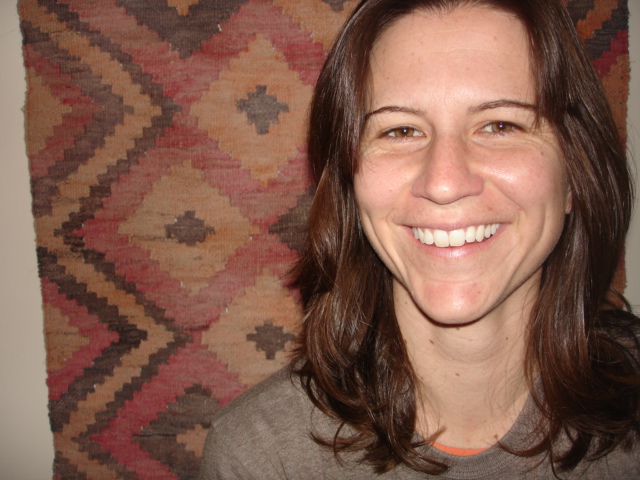
Carol Carpenter
BIO
Carol Carpenter was raised Southern Baptist, came out of the closet at 18, and grew up in the trans-Pecos oil and ranching plains of southeastern New Mexico – where the Bible Belt, the Mexican border, the oil business, the cowboy, and the poor collide to form a landscape of conflict. It is about this world, and that of Santa Fe to the north, that Carpenter writes.
Thematically, her work deals with the tension between progress and tradition. She pits urban and rural cultures against each other, working class against professional class, religious against secular, then watches them clash and connect. It is in these clashes that her characters find meaning, humor and insight. Viewed as a whole, her work proclaims that progress and tradition need each other; that opposite needs opposite; that without the harmonizing effect of poles, our world is out of balance.
While Carpenter’s writing is sometimes overtly political, it most often strives to uncover and honor the wisdom of all traditions and perspectives, to suspend cultural judgments in search of higher truths, and to celebrate the divergent stylistic and philosophical impulses of all storytellers.
Her influences include Horton Foote, Larry McMurtry, Cormac McCarthy, Sam Shepard, Annie Proulx, Anna Deavere Smith, Joseph Campbell, Jimmy Carter, country and western songwriters, Baptist preachers, right-wing demogogues, left-wing crackpots, the American Southwest and the rich oral tradition of her family and culture. She currently lives between New York City and Madrid, NM.
Plays:
WILD DOGS
Original Reading: Greer Garson Theater Center, Santa Fe, NM 2007
First Reading: Manhattan Theater Club, Studio Theater, NYC 2008
Second Reading: Arclight Theater, NYC 2009
Disney’s blockbuster movie Wild Hogs is shooting in the politically radical village of Madrid, New Mexico. As citizens set out to sabotage the production, the lead saboteur falls in love with the production assistant and money tempts them all. In the meantime, a wild dog is on the loose and might do more damage to Disney, and Madrid, than the villagers could ever have accomplished on their own. Wild Dogs examines the conflicting values of the still-wild American West—and one town’s struggle to define its values for itself.
Tender -Early 30s. Explosive lesbian anarchist who owns the coffee shop. Head pot dealer. Sharp-witted and cynical.
Ashley -Early 20s. Smokin’ hot. Straight-talking, ball-busting ladder climber. Sex is a job like everything else. Production assistant on the movi
Lacy -Early 40s. Pragmatic rebel and gallery owner. Loves to make a buck and give it away. Protective and controlling.
Earnest -Early 70s. The town idealist and gentleman. Too kind-hearted and friendly to take down the enemy. Overly eager. At times befuddled by the cynical youngsters around him.
Dale -30s-50s. Lovable screenwriter. Neurotic. Greedy but means no harm. Intelligent without depth. Can’t resist a good deal. Hawkeye 40s-60s. Rough-n-tumble cowgirl. A functioning drunk. No loyalties to anything but a good time and a paycheck. Lobo :30s-40s. King of the Bandido motorcycle gang. Turquoise watch and silver jewelry. Long braid. Tattoos of the ladies. Loves sugar.
Sheriff Salazar -Lobo’s old-time buddy and nemesis.
(Can be a recorded voice if required by production constraints)
The Following Characters May be Played by the Same Actor
Jonathan -40s. The Assistant Director. Heartless Drill sergeant. A screaming,demeaning time-obsessed robot of a man.
Chuck -40ish. Macho, misogynistic stunt coordinator. Maybe a Hell’s Angel? Maybe a liar? Overdresses the part.
One-Stroke – Late 30s. Cracked-out desert rat. Holes in the crotch of his pants. Wears one shoe. Hair like Encino Man. A fuse that’s finally been lit.
GOOD LONELY PEOPLE
First reading: National NewBorn Play Festival, NYC, 2010
Second reading: American Southwest Theater’s High Desert Play Festival, Las Cruces, NM, 2011
First production: Planet Connections Festivity, NYC, 2010, produced by Manhattan Theater Works Nominated for 6 Planet Connections Festival Awards
Winner, Best Playwriting at Planet Connections Festivity 2010
Winner, Audience Favorite Award, National NewBorn Play Festival, NYC
On election night, the only white Democratic family in a conservative Southwestern town holds a secret Obama party. But when their gay daughter arrives from the city for the celebration, they discover they are split on a California issue that hits close to the core, raising questions about their own sense of “family.”
Kay Barton: Late-60s. An upbeat, optimistic, strong-willed woman with
an independent mind and an impossibly complicated
evening ahead of her. Her lack of conventionality has
always plagued her. She failed home economics.
Fritz Barton: Kay’s husband. Late 60s. A soft-spoken and gentle
diplomat. A practicing Baptist and a wise man of
few words. He avoids conflict and adores his gay daughter.
Sissy Barton: Their daughter. Mid-30s. Charming and attractive, an
intellect who can “folks-it-up” when needed to blend in.
She is warm and well-intentioned though mercurial.
Mary Lou Mortenson: Crippled from polio. 50s. She should have been a
hippie but never quite got out of town. Wild and
eccentric by town standards, she lacks a social filter.
Enjoys making mischief.
Melissa Johnson: Mid-20s. Insecure, naïve and earnest. Not the prettiest
young woman in town, but not too bad for someone who
still hasn’t found a husband… Lonely, she longs for friends
and connection.
Verle Barton: Fritz’s brother. 70s. A paternalistic old school Democratic politician
and the grandest storyteller west of the Pecos River. The
only thing he loves more than family is Jesus.
Darnelle Barton: Kay’s sister and Verle’s wife. 70s. Proud to be a Christian
woman, wife and homemaker. Highly conventional, she
expects others to behave as her Good Lord intends.
All have a West Texan accent. Sissy can lay it on thick or make it disappear.
SWEET, SWEET SPIRIT –
Written in residency at American Southwest Theater/NMSU, Las Cruces, NM
Original Reading: Planet Connections Festivity, NYC, 2011
Second Reading: High Desert Play Festival 2012, Las Cruces, NM
Third Reading: Acadiana Reperatory Theater, 2012, Acadiana, LA
Fourth Reading: Barrow Group, NYC, 2012
Fifth Reading: Manhattan Theater Works, NYC, 2014
SemiFinalist, Wordsmyth Theater Festival, Houston, TX 2013
Winner, High Desert Play Festival 2012, Las Cruces, NM
Produced by American Southwest Theater/NMSU, Las Cruces, NM, September 2012
When a father’s temper lands his gay teenage son in the critical care unit of a small-town New Mexico hospital, the family members square off to assign blame and claim custodial rights. But as his condition worsens, each must turn inward and ask the tougher questions: Who, among them, is best to care for this child, and what place can they find for him in their conservative world?
NANNA JO JOHNSON:
65. A committed evangelical. Rigid but compassionate, fundamentalist yet intelligent. She finds safety in religion and in the small, provincial community of Lovington, New Mexico. Nanna Jo undergoes a crisis of faith as the play unfolds.
JENNIFER JOHNSON:
35. A direct and opinionated corporate oil executive. Fiercely independent, she’s a libertarian: liberal social views and sharply conservative fiscal views. Smart. Not kind. Despises laziness and dependency. Cosmopolitan compared to her surroundings. Lives in Lubbock, which she finds stifling and backwards.
JIMMY JOHNSON:
38. An educated good ol’ boy and small-town hotshot prosecutor who escaped his hometown for the “big city” of Hobbs, New Mexico. Judgmental, arrogant and angry – though humbled by the events of the play.
SUZANNE JOHNSON:
31. Kinda trashy, kinda sexy, kinda shallow, surprisingly smart and totally refreshing in the rigid evangelical world of the play. Irresponsible but fun, Suzanne is secretly an entrepreneur who dreams of running away to Dallas. Strongest accent in the play.
KENDALL KUYKENDALL:
38. Highly educated. A choir professor at Arizona State. Introspective. Emotionally solid and direct. A gay man who was tortuned as a teenager in Lovington, he has come home temporarily to take care of his ailing mother.
THE GUADALUPE –
Written in residency at American Southwest Theater/NMSU
Original reading: On the Square Productions, 2013, NYC
Semifinalist: National Playwrights Conference 2013
A family farm on the US/Mexican border becomes the target of a cartel territory war on a night that goes awry. With armed men silently surrounding the Valle-Northrip farm under cover of darkness, the family unite to strategize their escape. But when family secrets unravel, they discover that the more they learn the less they understand about the world just beyond their front door. The Guadalupe explores the changing economic and political realities of America’s rural borderland, and the politics, greed and desperation that fuel it.
SUSY VALLE-NORTHRIP– 60. Mexican-American. Savage classist. American patriot.
FREDDY NORTHRIP– 65. Susy’s husband. Great farmer. Bad businessman. Anglo.
VERONICA NORTHRIP– 35. Their daughter. A border patrol agent. Sharp, probing, self-righteous. Pragmatic until passionate.
RICKY NORTHRIP – 38. Their son. Reaping a lifetime of poor decisions.
LUCIA RAZA – 19. Ricky’s Mexican girlfriend. A survivor from Mexico’s poorest of the border’s poor. Resourceful. Beautiful.
DAKOTA KINNIBRUGH– 32. Veronica’s husband. A cop. Steady. Strategic.
SHERIFF BOB RYDELL – 70. A lifetime as the local sheriff. Wobbly and warm. Can spin a yarn.
* Please note: This is not a story of white folks in danger from brown folks on the border, it is the story of a typical borderlander family – who are as often of mixed ancestry than not – facing the realities of a rapidly changing borderland. For this reason, the playwright insists thatany producing theater makes a significant effort to cast Hispanic/Latino actors to play the characters who are of Hispanic/Latino descent.
UPCOMING READINGS/PRODUCTIONS:
-Staged reading of Sweet, Sweet Spirit in February at the 2014 National NewBorn Play Festival in NYC.
-Tickets will be available starting in January at www.mtworks.org
Normal
0
false
false
false
EN-US
X-NONE
X-NONE
/* Style Definitions */
table.MsoNormalTable
{mso-style-name:”Table Normal”;
mso-tstyle-rowband-size:0;
mso-tstyle-colband-size:0;
mso-style-noshow:yes;
mso-style-priority:99;
mso-style-parent:””;
mso-padding-alt:0in 5.4pt 0in 5.4pt;
mso-para-margin-top:0in;
mso-para-margin-right:0in;
mso-para-margin-bottom:10.0pt;
mso-para-margin-left:0in;
line-height:115%;
mso-pagination:widow-orphan;
font-size:11.0pt;
font-family:”Calibri”,”sans-serif”;
mso-ascii-font-family:Calibri;
mso-ascii-theme-font:minor-latin;
mso-hansi-font-family:Calibri;
mso-hansi-theme-font:minor-latin;
mso-bidi-font-family:”Times New Roman”;
mso-bidi-theme-font:minor-bidi;}
 New Mexican Playwrights